

 EPA/Shutterstock
Global oil prices jumped and stocks fell sharply on Monday in Asia after the US-Israel war with Iran entered its fifth week.
The price of Brent crude rose by more than 3% to above $115 (£86.77) a barrel, while US-traded oil climbed to $101.62 after gaining almost 2%. It puts Brent on track for its biggest monthly gain on record.
Japan's Nikkei 225 lost 2.8%, while the Kospi in South Korea closed almost 3% lower.
It comes after Iran-backed Houthi rebels in Yemen joined the conflict by striking Israel over the weekend and Iran threatened to expand retaliatory strikes against universities and the homes of US and Israeli officials.
US President Donald Trump said in an interview with the Financial Times on Sunday that he could "take the oil in Iran" and possibly seize its major fuel hub of Kharg Island.
When asked about Iranian defence on the island he said: "I don't think they have any defence. We could take it very easily."
Trump compared the potential move to Venezuela where the US plans to control the oil industry "indefinitely" after the seizure in January of then-President Nicolás Maduro.
Also over the weekend, Iran's parliament speaker warned that his country's forces were "waiting for American soldiers" as a further 3,500 US troops arrived in the Middle East.
Global energy markets have been hugely volatile after Tehran retaliated to US and Israeli strikes by threatening to attack ships that try to cross the Strait of Hormuz.
Lars Jensen, a shipping expert and former director at Maersk, warned that, even if the Strait of Hormuz "magically were to open tomorrow", there were still further price rises to come.
"We need to keep in mind that a lot of the oil that was loaded in the Persian gulf prior to this crisis is only now arriving in refineries," he told the BBC.
Overall, Jensen said the impact of the US-Israeli war on Iran could be "substantially larger" than the oil crisis of the 1970s, which sparked economic chaos.
And Jensen, who now runs the shipping consultancy Vespucci Maritime, also warned of the impact of the conflict on food prices.
He added: "You've got 20 to 30% of the seaborne fertiliser in the world originating from the Gulf.
"This will mean rapidly escalating food prices, especially in poorer countries."
Judith McKenzie, a partner at investment firm Downing, said the full impact of the war is yet to make its way through the fuel supply chain to hit consumers.
"Oil shocks don't show up instantly," she told BBC Radio 4's Today programme.
"If we can get some resolution in the Gulf this week then, although it's going to take a little bit of time to unwind and we will see inflation, it is fixable."
Around a fifth of the world's oil and gas supply usually passes through the narrow waterway but this has largely come to a standstill, pushing up prices.
Energy markets expert Sean Foley from Macquarie University said he expected oil prices to rise further unless the conflict eases.
The Houthi strikes have raised concerns that the armed group could stop energy shipments passing through Bab al-Mandeb strait near Yemen, Foley said.
A blockade of the waterway could hit a further 10% of world's oil supply, "putting significant strain on global supply chains", Foley said.
Andrew Lipow from consulting firm Lipow Oil Associates said he expected the price of Brent to reach $130 a barrel in the coming weeks as threats against the global energy supply continue.
"My greatest fear is that you have a general economic slowdown around the world... because consumers simply run out of money as they're spending more on energy and, in addition, food," he said.
The price of Brent was at around $72 a barrel on 27 February, the day before the US and Israel struck Iran.
On 18 March, the benchmark oil contract hit $119.50, the highest level since June 2022.
International BusinessOilIran warRelated
Why Chinese tech companies are racing to set up in Hong Kong
The spiky cactus fruit giving Indian farmers a cash boost
UK forecast to see biggest hit to growth from Iran war out of major economies
More from the BBC25 mins ago
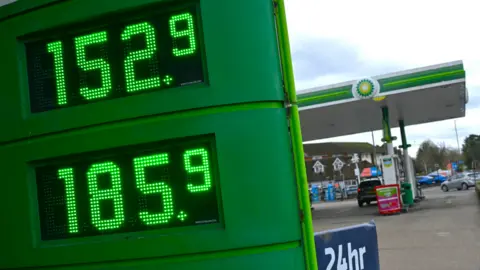
Fuel rations and free buses: How countries are responding to rising oil prices
Governments around the world have introduced measures to limit the impact of price increases.
25 mins ago3 hrs ago
Fuel tax halved and free public transport offered as war pushes up prices in Australia
Victoria and Tasmania are incentivising commuters not to drive in a bid to ease cost pressures.
3 hrs ago3 hrs ago
People 'spending less' during Iran war - businesses
Businesses in West Yorkshire say their costs are going up and people are spending less as the conflict continues.
3 hrs ago5 hrs ago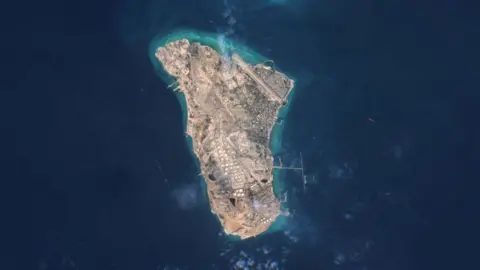
Why does the US have Iran's Kharg Island in its sights?
The tiny island is home to one of the most critical pieces of Iran's energy infrastructure.
5 hrs ago14 hrs ago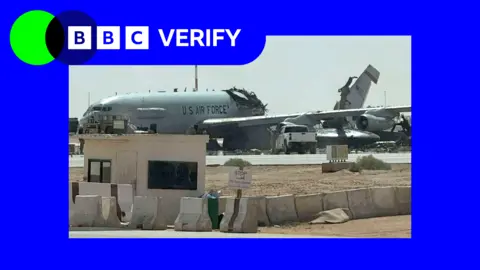
Photos show heavily damaged US radar jet at Saudi base
US Central Command has not yet publicly commented on the incident.
14 hrs agoCopyright Notice
The views expressed in this article are the author's own and do not represent the position of this website.
This article is published with the author's authorization. Reproduction without permission is prohibited.





Comments